Welder Performance Qualification (WPQ) is but one of the most important steps before assigning a job to the welder.
The welder qualification test (WQT) is performed to determine the skill of a welder, the welder performance qualification is carried out to check whether the welder or the welding operator can produce a good weld or not.
A performance qualification test (WQT) is carried out a test piece(test coupon) prepared as per the requirements of the approved WPS then the welder is asked to weld the test coupon in accordance with the qualified welding procedure specification (WPS).
Initial Inspection: Soon after completing the root run, a visual inspection is conducted to check for any signs of lack of fusion, lack of penetration or any surface defects then LPT (DPT or PT) can be performed (if required by the procedure).
Proceeding with welding: If the root run passes the inspection, then welder is allowed to proceed further. After completion of the entire welding, which includes the fill-up and final run, another visual inspection is performed, along with Liquid Penetrant Inspection (LPI) or Magnetic Particle Inspection (MPI) as per the requirements of the procedure, If the test coupon is satisfactory then it is sent for RT or DP for final testing.
Final Testing: Once the test coupon is finalized, it is sent for further evaluation through Radiography test – RT (or Ultrasonic Test – UT) or Mechanical tests depending on the requirements. After a satisfactory test report, A certificate and Identity card shall be issued to the welder and he may be employed for production welding (or fabrication welding). These are the general steps followed in most of the industries for the qualification of the welders in groove welding.
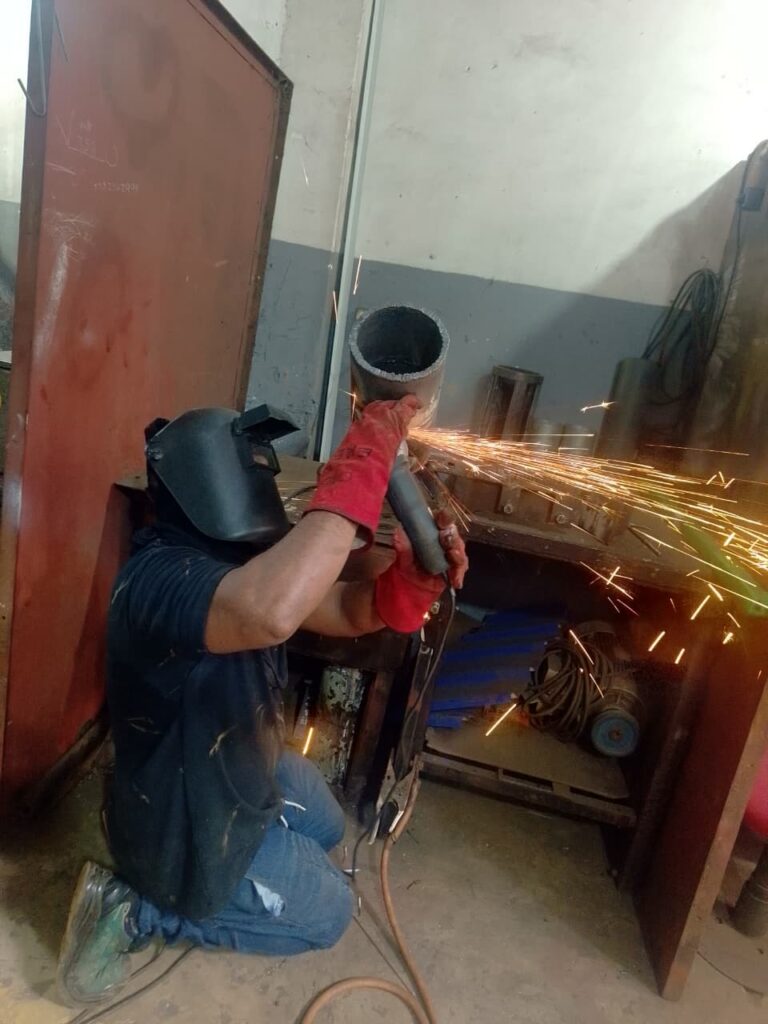
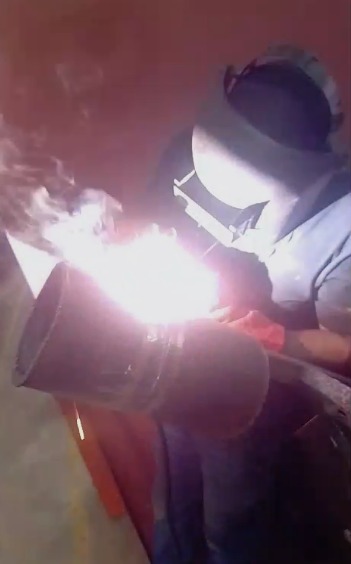
WPS is essentially a guide for the person that is going to weld the PQR test coupon and it can also be used as a document to get in principal approval from the client. You give the client the change to review what you intend to do, ie. if I run the test like this and do this testing, will you be happy with it.
This is not always required, but it is specified in some standards. It can save heartache buy ensuring the client is happy with the WPS at the end.
WPS is essentially a welder’s guide that includes applicable code requirements and production standards. It controls the welding process.
It has been compared to a recipe for welders. When cooking a roast, the recipe includes all the ingredients you need, plus the actual steps you will need to make sure the roast works out right and is repeatable.
A WPS is very similar. It includes details on what you will need and the welding processes to follow that will create a sound weld. However, instead of listing type of meat, barbeque temperature, time you should for, a WPS lists information such as base metal grade, amps, volts and travel speed along with many other details.
The WPS is a proven process of welding and is important to ensure welding operators in the field are maintaining the same, required standards across the board. The mechanical properties of a weld cannot be verified in production welds after welding so control of the welding process using a WPS is critical.
If either a novice or experienced welder follow the WPS, they should be able to produce welds with similar mechanical properties. This helps new welders grow to the same level as experienced welders. It ensures clients are receiving serviceable welds that are the strength, toughness and soundness required by the design.
A WPS always has ranges to allow for joint and operator technique variation, it is unlikely every joint is the same or every welder uses the same technique. These ranges are different for every standard. The ranges are based on what is known as essential variables. Things which if changed require you to requalify the WPS.
All WPSs start with a PQR. It is a record of the test. It DOES NOT have any ranges. It lists the actual values recorded during the welding of a test piece. It proves the welding process.
Then using the essential variables (ranges) from the relevant code/standard a WPS can be generated from this record of actual values.
PQR is essentially the ‘actual’ method that is used to create and test the welds to ensure they meet all applicable requirements.
The test procedures and final results are documented in the PQR. If the PQR meets the set standards of the welding world, then it will serve as the foundation on which one or more WPSs are drafted.
Even though a PQR eventually leads to a WPS, it is important for welders to have knowledge of both documents. In critical applications and in mechanized and automatic welds welders can refer to the PQR and replicate the actual values used in the test weld, this removes all the variation.
On face value, these documents look very similar but serve completely different purposes.
The best way to think of it is;
PQR is an office document
WPS is a workshop document
Both are necessary in most cases. The PQR supports the WPS as evidence of qualification.
Welder Qualification Test / Welder Performance Qualifications (WQT/WPQ)
While WPS and PQR are used to define and prove the welding process.
WQT/WPQ is used to test the actual welder. Is the welder able to produce a sound weld;
With a particular welding process ie. GMAW or GTAW
In a given position Horizontal, Vertical or Overhead
On a particular joint configuration Butt weld or Fillet weld.
A WQT does not test the mechanical properties, it looks at weld soundness only in most cases.
A Welder Qualification Test is recorded on documentation known as a test certificate that details the ranges that welder is qualified. Ranges or essential variables for WQT are not always the same as those for a WPS. An example would be that is a welder can weld in the overhead position (more difficult) it is logical they be qualified in the flat position (less difficult).
The welder completes a test coupon under supervision following a WPS. The weld is then tested using the method prescribed in the relevant standard.
The testing always includes as a minimum visual examination but may also require;
Bend tests – root/face or sides
Macro test – cross section view of weld
Fillet weld break test
Nick Break
Radiographic examination
Ultrasonic examination
The type and number of tests required are detailed in the relevant standard. The most common standards are for WQT are;
AWS D1.1
ASME IX
ISO 9606
Being able to weld and understanding welding are two different things. Someone that has a proven ability to understand what affects the outcome will always be a better option.
If you are looking to hire a welder, you can ask about previous WQT before hiring them. Generally companies pay for the WQT so it remains the companies property not the welders, So welders will not always have them. Certain standards do not allow the transfer of the qualifications. If you are looking for some assistance there are a number of providers that can assist with WQT online that will help you develop your welding management system.
It should be noted that qualification and certification are different things, the differences between the two will be explained in a different blog.
If the welding world confuses you, hopefully this has gone some way to demystifying it.
The terms may seem overwhelming, but the documents these acronyms represent are extremely important to the welding industry.
+94 11 2 677335
+94 11 4347455
info@electroref.com
#74, Lesley Ranagala Mawatha, Borella, Sri Lanka
© 2025 ElectroRef Engineers Inspection (Pvt) Limited – All rights reserved.